
Vehicle Preparation
Tips for winterizing your car for extreme cold weather – Preparing your vehicle for extreme cold weather is crucial for safe and reliable operation. Proper preparation minimizes the risk of breakdowns and ensures your journey remains comfortable and worry-free. This involves meticulous attention to various aspects of your car, from tires and fluids to the battery and wipers.Effective winterization involves a proactive approach, anticipating potential challenges posed by frigid temperatures.
Addressing these concerns ahead of time significantly improves your driving experience and safety.
Essential Items for Winter Readiness
Proper preparation involves gathering essential supplies. This includes warm clothing, blankets, a first-aid kit, jumper cables, a shovel, and ice scrapers. These items provide essential support during unexpected winter events.
- Warm clothing and blankets for potential emergencies.
- A comprehensive first-aid kit with cold weather-specific supplies.
- Jumper cables to assist with dead batteries.
- A sturdy shovel for digging out your vehicle if necessary.
- Effective ice scrapers for clearing frost and ice from windows.
Winter Tires and Their Characteristics
Selecting appropriate winter tires is paramount for maintaining traction and control in icy conditions. The specific characteristics of different winter tires vary based on their design and intended use.
- Studded Tires: These tires feature metal studs embedded in the tread, providing exceptional grip on ice and snow. They are highly effective in extremely cold climates but can damage roads if used excessively on other surfaces.
- Studless Winter Tires: These tires use a specialized tread pattern and rubber compound designed for optimal grip in cold weather conditions. They provide a good balance between traction and road noise compared to studded tires.
The importance of winter tires in extreme cold cannot be overstated. They offer enhanced traction, stability, and safety, significantly reducing the risk of skidding or losing control on icy roads.
Fluid Checks and Top-offs
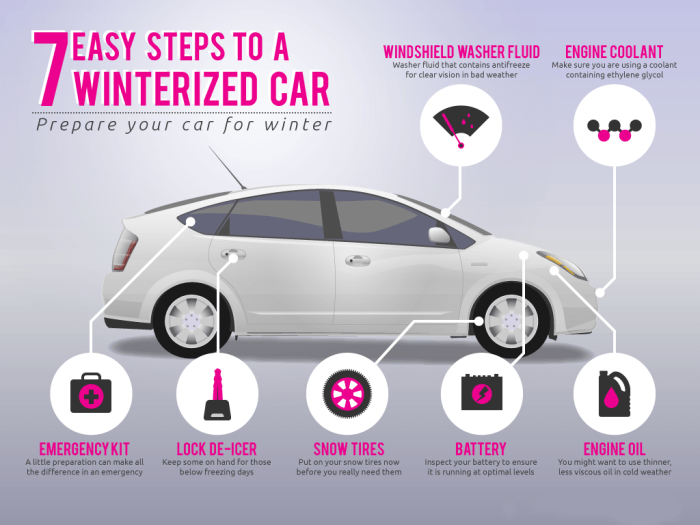
Regularly checking and topping off fluids, particularly antifreeze, power steering fluid, and brake fluid, is vital for optimal performance and safety in cold weather. This ensures that these fluids maintain their viscosity and don’t freeze.
- Anti-freeze: Check the coolant level and ensure it is within the appropriate range. Verify the concentration and top off with a suitable antifreeze solution if needed. Refer to your vehicle’s owner’s manual for specific recommendations on antifreeze types.
- Power Steering Fluid: Check the power steering fluid level and top it off if necessary. Low fluid levels can cause difficulty in steering.
- Brake Fluid: Check the brake fluid level and replenish it if low. Brake fluid expands and contracts with temperature changes. Low fluid levels compromise braking effectiveness.
Wiper Blade Inspection and Replacement
Maintaining effective wipers is crucial for visibility in icy conditions. Damaged or worn-out wiper blades can hinder visibility, impacting driving safety.
- Inspect wiper blades for any cracks, tears, or significant wear.
- Replace worn or damaged blades to ensure proper cleaning of the windshield.
Preparing Your Car Battery for Cold Weather
Cold weather significantly impacts a car battery’s performance. Reduced capacity can lead to starting difficulties.
- Ensure your battery terminals are clean and tight.
- Use a battery charger or battery tender to maintain a good charge.
Anti-freeze Comparison Table
Different antifreeze types have varying effectiveness in extreme cold temperatures. This table summarizes their performance characteristics.
| Type | Effectiveness in Extreme Cold | Cost |
|---|---|---|
| Ethylene Glycol-based | High | Moderate |
| Propylene Glycol-based | Very High | Higher |
Interior Considerations
Protecting your car’s interior from the harshness of winter is crucial for maintaining its value and functionality. Extreme cold can lead to cracked or dried-out plastics, warped dashboards, and even damage to electronic components. Taking proactive steps to insulate and regulate the temperature within your vehicle will significantly reduce the risk of these issues.Proper interior preparation can greatly enhance your winter driving experience.
By understanding the mechanisms of condensation and moisture, and employing effective strategies for temperature control, you can keep your vehicle’s interior comfortable and safe. This section details methods for maintaining a comfortable and safe interior environment during the cold season.
Protecting Interior Components from Cold Damage
Cold temperatures can have detrimental effects on various interior components. Proper protection can prevent costly repairs and maintain the vehicle’s overall condition. Maintaining the proper temperature range is vital for preventing damage to plastics, electronic components, and even the upholstery.
Preventing Condensation and Moisture Buildup
Condensation and moisture buildup are common problems during cold weather. These issues can lead to mold, mildew, and other unpleasant conditions. Utilizing dehumidifiers or strategically placing moisture absorbers can mitigate these issues.
Maintaining a Comfortable Interior Temperature
Maintaining a comfortable interior temperature is key for both driver and passenger comfort. Utilizing insulated car covers or blankets can help retain heat. Investing in a high-quality, electric car heater can expedite the process. These methods will keep the interior warm quickly.
Accessories for Maintaining a Comfortable Interior
Several accessories can enhance your vehicle’s winter comfort. A good quality, electric car heater will rapidly warm the interior. Insulated car covers can help retain heat. These will effectively keep the interior warm, especially in severe cold conditions. Additionally, consider using a car seat warmer to warm the seating area, providing extra comfort and preventing discomfort from cold seats.
Protecting Dashboard and Steering Wheel from Freezing
Protecting the dashboard and steering wheel from freezing can prevent discomfort and potential damage. Using protective covers for these areas can help retain heat. Furthermore, using an insulated steering wheel cover can prevent your hands from getting numb and cold while driving.
Car Seat Cover Comparison
| Type of Cover | Effectiveness Against Extreme Cold | Pros | Cons |
|---|---|---|---|
| Insulated Fleece Covers | High | Excellent insulation, soft texture | May not fit all seats perfectly, potentially bulky |
| Waterproof/Water-Resistant Covers | Medium | Protects against spills and moisture, some insulation | Limited insulation compared to fleece, may not completely prevent cold |
| Standard Cloth Covers | Low | Affordable, simple to install | Minimal insulation, little protection against cold |
This table provides a comparison of different car seat cover types and their effectiveness against extreme cold weather. Consider the specific needs and conditions of your vehicle when selecting the most appropriate cover. Factors such as the severity of the cold and the type of car seat are important to consider.
Exterior Maintenance
Preparing your vehicle for extreme cold weather involves more than just the interior. Effective exterior maintenance is crucial for safe and reliable operation. This section will detail crucial steps for clearing snow and ice, preventing buildup, ensuring proper tire pressure, and maintaining essential components.
Snow and Ice Removal
Proper snow and ice removal is vital for maintaining vehicle safety and preventing damage. Aggressive scraping or using excessive force can damage the paint. Using a snow brush, scraper, or ice melt can help remove snow and ice without causing harm.
- Start by scraping away any loose snow or ice, especially from the windows and mirrors. This will make subsequent steps easier and reduce the risk of damaging the vehicle’s surface.
- Use a snow brush to gently remove snow from the vehicle’s body, roof, and hood. Focus on removing snow from areas that could cause potential damage, such as the roof.
- Be cautious when using ice melt. Apply it sparingly, following product instructions. Avoid over-application to prevent damage to the paint or surrounding areas.
- Remove snow and ice from the vehicle’s undercarriage to prevent potential damage from accumulating moisture and ice.
Preventing Ice Buildup on Windows and Mirrors
Preventing ice buildup on your vehicle’s windows and mirrors can significantly improve visibility and reduce the risk of accidents. Using a de-icer or warm water, followed by scraping, is a common method. Applying a de-icer before the ice forms is effective.
- Apply a de-icer or ice melt to windows and mirrors. Follow the product instructions for proper application and avoid over-application to prevent damage.
- Use a scraper to remove ice after the de-icer has had time to work. Be gentle to avoid scratching the glass.
- A heated windshield or window defroster can be used to prevent ice from forming. Utilize these features early and regularly, especially during prolonged periods of cold weather.
- Using a squeegee after removing ice can help remove any remaining water.
Tire Inflation
Maintaining proper tire pressure is essential for optimal vehicle performance in cold weather. Cold temperatures cause tire pressure to decrease, which can affect handling and fuel efficiency. Regular checks and adjustments are important.
- Check your tire pressure regularly, especially during cold weather, and inflate tires to the manufacturer’s recommended pressure. Check the sticker located inside the driver’s side doorjamb or your owner’s manual for the appropriate pressure.
- Use a reliable tire pressure gauge to accurately measure tire pressure. This is critical to ensure the correct inflation level.
- Proper tire inflation improves fuel efficiency and reduces the risk of tire damage.
Lights and Windshield Wipers
Ensuring your vehicle’s lights and windshield wipers are in good working order is vital for safety. Regular checks can help prevent malfunctions during winter storms.
- Inspect all exterior lights, including headlights, taillights, and brake lights, to ensure they are functioning properly. Replace any faulty bulbs promptly.
- Check the condition of your windshield wipers. Replace worn or damaged wipers to maintain visibility and prevent streaks on the windshield.
- Clean the windshield wipers with a suitable cleaner to maintain their effectiveness. This can be done regularly to avoid debris build-up.
Preventing Frost Buildup on Car Windows
Preventing frost buildup can be achieved by using methods such as a de-icer or a car cover.
- Applying a de-icer to the windows and mirrors will prevent frost from forming and help with visibility.
- Parking your car in a garage or covered area can prevent frost from accumulating on the vehicle’s exterior surfaces.
- Using a car cover can also help prevent frost buildup and protect the vehicle from the elements.
Snow Brush Comparison
Different snow brushes offer varying levels of effectiveness. Choosing the right brush depends on the type of snow and the desired level of effort.
| Snow Brush Type | Effectiveness | Pros | Cons |
|---|---|---|---|
| Plastic Bristle Brush | Moderate | Affordable, lightweight | Can scratch paint, less effective on heavy snow |
| Metal Bristle Brush | High | Effective on heavy snow, durable | Can scratch paint, more expensive |
| Rubber Bristle Brush | High | Effective, less likely to scratch paint | More expensive than plastic, can be heavy |
Emergency Preparedness
Source: detailedvehiclehistory.com
Winter driving in extreme cold presents unique challenges. Proper preparation can significantly reduce the risk of accidents and ensure your safety and well-being. This section focuses on building an emergency preparedness plan for your winter travels.Accidents can happen at any time, but the cold intensifies the severity of issues. Having a well-stocked emergency kit and understanding how to react to potential problems is critical.
Knowing what to do in the event of a breakdown, and maintaining safe driving practices in icy conditions, are crucial aspects of winter preparedness.
Emergency Supplies Checklist
A well-prepared emergency kit is your first line of defense in adverse winter conditions. The contents should provide essential necessities for survival in case of a breakdown or other emergencies.
- Jumper cables: Essential for jump-starting a dead battery, especially in freezing temperatures when battery performance is significantly impacted.
- Warm blankets or sleeping bags: Provide insulation and warmth in case of prolonged delays or overnight breakdowns.
- Non-perishable food and water: Sufficient supplies to sustain you and your passengers for several hours or even a day.
- First-aid kit: A comprehensive kit should include bandages, antiseptic wipes, pain relievers, and any personal medications.
- Flashlight and extra batteries: Crucial for visibility in low-light conditions or during a power outage.
- Whistle: A high-pitched whistle can attract attention in an emergency situation, especially in remote areas.
- Gloves, hats, scarves, and warm clothing: Protecting from the cold is vital, especially during extended periods of waiting.
- Cell phone charger or portable power bank: Maintaining communication is essential in emergencies, and a backup power source is critical in case of a power outage.
- Ice scraper and snow brush: Essential for clearing your windshield and windows in snowy or icy conditions.
- Sand or kitty litter: Provides traction if your vehicle gets stuck in snow or ice.
Preparing for Car Breakdowns in Extreme Cold
Knowing how to react to a car breakdown is vital. Extreme cold can exacerbate problems, so proactive measures are paramount.
- Check the condition of your car’s battery and charging system regularly. A weak battery or charging system is significantly more prone to failure in cold temperatures.
- Inform someone of your travel plans, including your route and estimated time of arrival. This allows for quick response if you encounter issues.
- Maintain a safe distance from other vehicles, especially on icy roads. This gives you more time to react to sudden changes in road conditions.
- If your vehicle breaks down, stay with your vehicle, and signal for help. If possible, move to a safe location away from traffic.
- Use emergency lights or reflective triangles to warn other drivers of your location. These can significantly improve your safety in low-visibility conditions.
Safe Driving Habits in Icy and Snowy Conditions, Tips for winterizing your car for extreme cold weather
Safe driving habits are crucial in icy and snowy conditions.
- Drive slower than usual and increase following distances. Reduced speed allows for more control and reaction time.
- Avoid sudden braking or acceleration. Sudden movements can lead to loss of control on slippery surfaces.
- Use low-gear driving techniques to maintain control, especially on steep inclines or declines.
- Be prepared for potentially longer travel times. Inadequate preparation can lead to delays and increased risk of accidents.
Checking Your Car’s Battery and Charging System
Regular checks on your battery and charging system are essential for optimal performance, especially during cold weather.
- Visually inspect the battery terminals for corrosion. Corrosion can reduce the battery’s efficiency and lead to failure.
- Use a multimeter to test the battery’s voltage. A voltage significantly below 12.6 volts indicates a possible issue.
- Ensure the charging system is functioning correctly. A faulty charging system can damage the battery over time.
Emergency Contacts and Services
Having a list of emergency contacts and services readily available can expedite response times.
- Emergency roadside assistance numbers: Keep these readily available in case of breakdowns or other issues.
- Local towing services: Knowing reliable towing services in your area can be beneficial in case of vehicle immobilization.
- Emergency contact numbers for family and friends: This ensures someone is aware of your situation in case of an emergency.
Comparison of Winter Emergency Kits
The table below compares different types of winter emergency kits and their contents.
| Kit Type | Contents |
|---|---|
| Basic Kit | Jumper cables, blankets, flashlight, first-aid kit, water, non-perishable food, ice scraper, cell phone charger |
| Extended Kit | All basic kit items plus extra warm clothing, whistle, sand/kitty litter, basic tools, map, compass |
| Luxury Kit | All extended kit items plus a portable power bank, satellite communication device, high-powered flashlight, and a GPS device |
Fuel Efficiency: Tips For Winterizing Your Car For Extreme Cold Weather
Source: autoclinicoffranklin.com
Winter’s frigid temperatures can significantly impact your vehicle’s fuel economy. Lower temperatures affect fuel combustion and engine performance, leading to a decrease in fuel efficiency. Understanding these factors and implementing appropriate strategies can help you maintain optimal fuel consumption during the cold months.Cold weather affects the viscosity of fuel, making it thicker and harder to flow through the fuel lines.
This increased resistance can lead to reduced fuel delivery to the engine, resulting in decreased power and fuel efficiency. Similarly, the engine’s components, like the oil and coolant, also thicken, affecting lubrication and heat transfer, respectively. This further contributes to the reduction in overall fuel economy.
Impact of Cold Weather on Fuel Efficiency
Cold temperatures significantly reduce the efficiency of fuel combustion within the engine. The lower temperatures can make it more difficult for the fuel to ignite and burn completely, resulting in a loss of power and increased fuel consumption. The thicker fuel and oil contribute to reduced lubrication, and this can also decrease engine performance.
Methods for Optimizing Fuel Consumption
Maintaining a consistent driving speed, avoiding sudden acceleration and braking, and driving at a steady pace can help improve fuel economy. Gentle acceleration and braking reduce the strain on the engine, minimizing fuel consumption. Avoiding excessive idling also contributes to better fuel efficiency.
Strategies for Preventing Fuel Line Freezing
Using a fuel stabilizer can help maintain the fuel’s viscosity, preventing it from thickening excessively. Regular maintenance, including checking and replacing fuel filters as recommended, ensures optimal fuel flow. Parking your vehicle in a garage or a sheltered area can help keep the fuel lines warm, reducing the risk of freezing.
Impact of Driving Habits on Fuel Economy
Aggressive driving, including rapid acceleration and braking, is detrimental to fuel efficiency in all weather conditions, but especially in winter. Maintaining a consistent speed and avoiding abrupt maneuvers can significantly improve fuel economy. Maintaining a proper tire pressure is also crucial, as underinflated tires increase rolling resistance, consuming more fuel.
Tips on Selecting the Right Fuel Type for Cold Weather
Using the recommended fuel grade for your vehicle is crucial, as different grades have varying viscosities. Consult your vehicle’s owner’s manual for specific recommendations on fuel type. Using the appropriate fuel type can help ensure optimal combustion and minimize the negative impact of cold weather on fuel efficiency.
Factors Affecting Fuel Efficiency in Cold Climates
- Fuel Viscosity: Lower temperatures increase fuel viscosity, making it harder to flow through the fuel lines, resulting in reduced fuel delivery to the engine and decreased efficiency. Examples include using a lower grade of fuel than recommended, or not using a fuel stabilizer during the winter.
- Engine Oil Viscosity: The viscosity of engine oil also increases in cold weather, impacting lubrication and heat transfer. This reduced lubrication can contribute to decreased engine performance and fuel efficiency. Using a winter-grade oil is crucial for optimal lubrication during cold weather.
- Air Density: Colder air is denser than warmer air, which affects the engine’s ability to intake the required amount of air for combustion. This leads to reduced fuel efficiency.
- Battery Performance: A cold battery requires more energy to start the engine, which can impact fuel efficiency, as it draws more current from the alternator. Maintaining a healthy battery and using appropriate battery terminals are crucial for optimal starting performance.
- Driving Conditions: Factors like steep inclines and high winds require more fuel to overcome the increased resistance, which directly affects fuel economy.
Specific Vehicle Considerations

Source: thehumbledhomemaker.com
Winterizing your vehicle effectively depends on its type. Different vehicle designs and features necessitate tailored approaches. Understanding these distinctions allows for a more comprehensive and successful winter preparation process.Factors like vehicle size, weight, and engine type influence the specific steps required for optimal winter performance. Specialized equipment, maintenance procedures, and even fuel efficiency strategies vary significantly between SUVs, trucks, sedans, and other types.
This section delves into these distinctions, providing practical guidance for various vehicle types.
SUV and Truck Winterization
SUVs and trucks, with their typically larger size and higher ground clearance, present unique winterization challenges. Their increased weight and potential for off-road use require extra attention. Proper tire inflation and chain preparation are paramount.
- Tire Pressure: Maintaining proper tire pressure is critical. Cold temperatures reduce tire pressure, potentially leading to reduced traction and handling. Consult your owner’s manual for recommended tire pressures in cold weather.
- All-Weather Tires: All-weather tires offer better grip in both wet and snowy conditions, enhancing safety and stability. Consider the specific tread patterns and compounds designed for winter conditions.
- Snow Chains: Snow chains or tire chains are often necessary for driving on snow-covered or icy roads, especially in mountainous regions or areas with frequent snowfall. Ensure proper installation and familiarity with their use.
- Battery and Fluids: Battery performance often decreases in cold temperatures. Using a battery terminal protector or ensuring the battery is adequately charged can be helpful. Inspect and potentially replace fluids as needed. Consider using winter-grade antifreeze to prevent freezing.
Sedan Winterization
Sedans, due to their lighter weight and lower profile, present different winterization needs compared to SUVs and trucks. While not as demanding, certain maintenance tasks remain crucial.
- Fluid Checks: Regular checks of engine fluids, transmission fluids, and brake fluids are essential. Using winter-grade fluids can prevent freezing and ensure smooth operation.
- Wiper Blades: Proper wiper blade condition is critical in cold weather. Inspect and replace wiper blades as needed to ensure effective visibility.
- Windshield Washer Fluid: Use winter-formula windshield washer fluid to prevent freezing and maintain clear visibility.
Hybrid and Electric Vehicle Winterization
Hybrid and electric vehicles (EVs) require a nuanced approach to winterization. The battery pack’s performance is particularly sensitive to cold temperatures.
- Battery Performance: Cold temperatures can affect the performance of the battery pack in hybrid and electric vehicles. Allowing the vehicle to warm up sufficiently before driving can help optimize performance.
- Charging Considerations: Charging in cold temperatures can potentially affect the battery’s charge cycle. If possible, avoid charging in extreme cold weather. Monitor the charging process for unusual behavior.
- Fluid Checks: Regular checks of engine fluids, coolant, and other critical fluids are still essential. Using winter-grade fluids can prevent freezing and ensure smooth operation.
Vehicle-Specific Maintenance
Specific maintenance tasks may vary depending on the make and model of your vehicle. Consult your owner’s manual for make- and model-specific recommendations for winter preparation.
- Brakes: Ensure brakes are functioning correctly. Cold temperatures can affect brake responsiveness.
- Lights: Check all lights to ensure they are functioning correctly.
- Wipers: Proper wiper blade function is critical. Inspect and replace as needed.
Comparison Table
| Vehicle Type | Tire Pressure | Fluid Checks | Battery Care | Specialized Equipment |
|---|---|---|---|---|
| SUVs/Trucks | Crucial, consider winter tires | Essential, winter-grade fluids | Monitor closely, potentially use battery protector | Snow chains, all-weather tires |
| Sedans | Important, but less critical | Essential, winter-grade fluids | Monitor for performance issues | All-weather tires, potentially snow chains |
| Hybrid/Electric | Important, consider winter tires | Essential, winter-grade fluids | Allow warm-up, monitor charging | All-weather tires, charging considerations |


