
Understanding Manual Transmission Basics
Importance of regular maintenance for a manual transmission – A manual transmission, commonly known as a stick shift, is a crucial component in many vehicles. Understanding its operation is essential for any driver looking to maintain their vehicle effectively. Proper maintenance hinges on a good grasp of the transmission’s inner workings.Manual transmissions utilize a gear system to transfer power from the engine to the wheels, allowing the driver to select different gear ratios for varying driving conditions.
This system, while seemingly simple, has intricate mechanisms that contribute to the vehicle’s performance and fuel efficiency.
How a Manual Transmission Works
A manual transmission’s fundamental operation involves shifting gears to match the engine’s speed to the vehicle’s speed and load. The driver uses the clutch pedal to engage and disengage the transmission’s components, allowing them to select the appropriate gear. Engaging the gear lever and disengaging the clutch effectively changes the ratio of the transmission, thus changing the vehicle’s speed.
Key Components of a Manual Transmission System
The manual transmission system comprises several crucial components, each playing a specific role in the overall function. Understanding their individual functions is vital for maintaining the transmission’s health.
| Component Name | Function | Location in the Transmission |
|---|---|---|
| Clutch | Disengages the engine from the transmission, allowing the driver to shift gears smoothly. | Usually at the front of the transmission, directly connected to the flywheel. |
| Flywheel | A heavy disc that absorbs the torque from the engine and transfers it to the clutch. | Connected to the engine crankshaft. |
| Gearset | A series of gears with varying tooth counts that provide different gear ratios. | Located centrally within the transmission housing. |
| Gear Shift Lever | Allows the driver to select the desired gear. | Accessible to the driver on the transmission tunnel. |
| Synchronizers | Devices within some manual transmissions that smooth the engagement of gears by matching the rotational speeds of the input and output shafts. | Integrated within the gear assembly, specifically where different gears meet. |
| Input Shaft | Receives power from the clutch and transmits it to the gearset. | Located within the transmission, connecting to the clutch. |
| Output Shaft | Transmits power from the gearset to the driveshaft and eventually to the wheels. | Located within the transmission, connecting to the driveshaft. |
Types of Manual Transmissions
Different manual transmission designs exist, each with its own characteristics.
- Standard Manual Transmissions: These transmissions lack synchronizers in some gears, requiring the driver to carefully match engine speed to gear speed before shifting to avoid damage. This type of transmission is common in older vehicles and requires more precise shifting technique.
- Synchronized Manual Transmissions: These transmissions incorporate synchronizers in all or most gears, making shifting smoother and easier. This feature reduces the need for precise speed matching, making it more user-friendly for drivers.
Function of Each Component
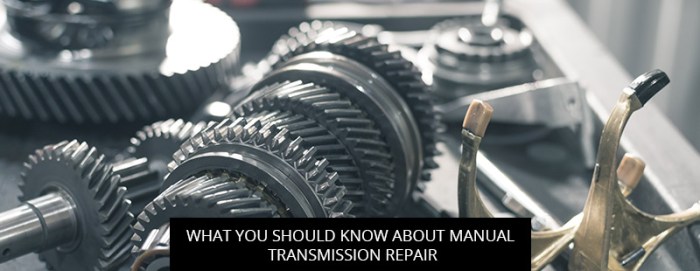
Each component within a manual transmission plays a critical role in its operation. Their coordinated function allows for efficient power transfer and smooth gear changes. Understanding the specific function of each component aids in identifying potential issues and performing appropriate maintenance.
Importance of Regular Maintenance
Source: mistertransmission.com
Regular maintenance of a manual transmission is not just a good practice; it’s a necessity for optimal performance and longevity. Proper care prevents small issues from escalating into costly repairs and ensures the transmission functions reliably and efficiently for years to come. Ignoring routine maintenance can lead to significant problems and financial strain down the line.Regular maintenance tasks, when performed diligently, protect the transmission’s internal components from wear and tear.
This proactive approach safeguards against premature failure, potentially saving you thousands of dollars in repair costs compared to reactive maintenance. It also contributes to a smoother driving experience and enhanced fuel economy.
Crucial Role of Preventative Maintenance
Preventative maintenance is paramount for a manual transmission. Regular inspections and servicing, even if no apparent problems exist, are vital for maintaining optimal performance and extending the life of the transmission. These actions are akin to preventive healthcare for your vehicle; they address potential issues before they become significant problems. By addressing minor issues early, you can avoid the need for extensive and costly repairs in the future.
Consequences of Neglecting Maintenance
Neglecting regular maintenance can lead to a cascade of negative consequences for your manual transmission. Ignoring routine checks and services can cause gradual wear and tear on crucial components, such as the clutch, gears, bearings, and synchronizers. This progressive deterioration can result in progressively more significant problems, eventually requiring costly repairs.
Cost Implications of Neglect
The cost of neglecting maintenance for a manual transmission can be substantial. Small, easily remedied issues, if ignored, can quickly escalate into major problems, demanding extensive repair work. This is analogous to ignoring a nagging cough, which can develop into a serious illness requiring prolonged and costly treatment. The financial impact of neglecting maintenance is substantial and often exceeds the cost of preventative measures.
Potential Risks Associated with Neglect
Ignoring regular maintenance introduces several potential risks to the manual transmission and the vehicle as a whole. These risks include reduced performance, increased fuel consumption, unpredictable vehicle behavior, and potential catastrophic failure. The risks associated with neglecting maintenance are multifaceted and can result in substantial downtime, inconvenience, and financial strain.
Comparison of Preventative Maintenance and Repair Costs
| Preventative Maintenance Cost (Estimated per Year) | Repair Cost due to Neglect (Estimated) ||—|—|| $100 – $200 | $500 – $3000+ || $150 – $250 | $700 – $5000+ || $200 – $300 | $1000 – $8000+ |The table above illustrates the substantial difference in costs between preventative maintenance and the consequences of neglecting it. Investing a relatively small amount annually in preventative maintenance can prevent significantly higher repair bills down the road.
These figures are estimations, and the actual costs may vary depending on the specific vehicle, type of maintenance, and the severity of the neglected issue. Factors like driving conditions and usage frequency can also influence the cost.
Preventive Maintenance Procedures
Source: googleapis.com
Regular maintenance is crucial for extending the lifespan and optimal performance of your manual transmission. Properly maintained transmissions offer smoother operation, reduced wear and tear, and minimized the risk of costly repairs. A proactive approach to maintenance is significantly more economical than addressing problems after they escalate.A well-maintained manual transmission system is essential for reliability and safe operation.
Preventive maintenance tasks, performed consistently, help identify potential issues early, allowing for timely repairs and preventing costly failures. This proactive approach safeguards the vehicle’s longevity and protects the driver from unexpected mechanical problems.
Routine Maintenance Checklist
Regular checks are vital for early detection of potential problems in the transmission. This checklist ensures that crucial components are inspected at predetermined intervals. By adhering to this schedule, you can maintain optimal transmission health and performance.
- Inspect the transmission fluid level and condition.
- Check for leaks around the transmission housing.
- Inspect the clutch pedal for proper operation and play.
- Examine the condition of the transmission shift linkage.
- Listen for unusual noises emanating from the transmission.
- Observe the operation of the gears during shifting.
Transmission Fluid Change Procedure
Changing transmission fluid is a crucial maintenance task. It helps maintain optimal performance and prevents the accumulation of harmful contaminants that can damage the transmission.
- Gather necessary materials: New transmission fluid, appropriate drain pan, funnel, wrench, and rags.
- Warm up the vehicle: Allow the engine to run for a few minutes to warm the transmission fluid, making it easier to drain.
- Locate the drain plug: Identify the drain plug located on the transmission housing. Consult your vehicle’s owner’s manual for specific locations.
- Position the drain pan: Place the drain pan securely beneath the drain plug.
- Remove the drain plug: Use the appropriate wrench to remove the drain plug and allow the fluid to drain completely.
- Install new drain plug: Replace the drain plug with a new gasket and tighten it to the specified torque.
- Fill the transmission with new fluid: Use the funnel to add the recommended amount of new transmission fluid to the transmission fill plug, following the manufacturer’s specifications.
- Check fluid level: Verify that the fluid level is within the specified range using the dipstick provided by the manufacturer.
- Re-check operation: Operate the transmission through its gears to ensure smooth shifting and proper functionality.
Fluid Level and Condition Inspection
Regularly checking the transmission fluid level and condition is vital. The fluid acts as a lubricant and coolant, ensuring smooth operation and preventing premature wear.Fluid level should be checked with the vehicle parked on a level surface and the engine turned off. The fluid should be clear and have a light amber color. Darkened or discolored fluid, or low levels, may indicate a need for replacement.
Clutch Component Inspection
The clutch system is a vital part of the manual transmission. Inspecting the clutch components is crucial to ensure its smooth and efficient operation.Inspect the clutch pedal for proper free play. Check the clutch cable for any signs of damage or wear. Ensure the clutch disc is in good condition, free from excessive wear, and the pressure plate is securely mounted.
Transmission Gear Inspection
Inspecting the transmission gears is important for ensuring smooth gear engagement and proper shifting. Examine the gears for any signs of damage, wear, or misalignment.The gears should operate smoothly with no grinding or sticking. Observe for any visible damage to the teeth of the gears or the surrounding components.
Maintenance Task Frequency
The frequency of these maintenance tasks varies based on driving conditions and usage.
| Maintenance Task | Frequency |
|---|---|
| Transmission Fluid Change | Every 30,000 to 50,000 miles or as recommended by the manufacturer |
| Fluid Level Check | Every oil change or monthly |
| Clutch Component Inspection | Every oil change or monthly |
| Transmission Gear Inspection | Every 10,000 to 20,000 miles or as needed |
Troubleshooting Common Issues: Importance Of Regular Maintenance For A Manual Transmission
Maintaining a manual transmission requires a keen understanding of potential problems. Knowing the common issues, their causes, symptoms, and solutions can prevent costly repairs and ensure smooth operation. This section provides a comprehensive guide to diagnose and address typical transmission problems.
Identifying Common Transmission Problems
Diagnosing manual transmission issues often involves careful observation of symptoms. A systematic approach, considering potential causes, helps pinpoint the root of the problem. By understanding the interplay between various components and their functions, you can effectively identify the source of the malfunction.
Causes of Transmission Problems, Importance of regular maintenance for a manual transmission
Various factors contribute to manual transmission malfunctions. These range from simple wear and tear to more complex mechanical failures. Incorrect shifting techniques, lack of regular maintenance, or even harsh driving conditions can exacerbate the issue. Understanding these contributing factors is crucial for effective troubleshooting.
Symptoms of Transmission Problems
Recognizing the symptoms of a malfunctioning manual transmission is the first step toward resolution. Symptoms can range from subtle hints to overt failures. Early detection allows for timely intervention and prevents further damage. Common symptoms include unusual noises, slipping gears, or difficulty shifting.
Solutions to Transmission Problems
Numerous solutions exist for common manual transmission problems. The most suitable solution depends on the specific issue identified. Some problems may require simple adjustments, while others might necessitate more extensive repairs. Solutions range from straightforward fixes to more complex procedures.
Comparison of Troubleshooting Solutions
Various approaches exist for resolving manual transmission issues. The effectiveness of each solution depends on the specific problem encountered. For example, a simple lubrication issue might be addressed with oil changes, whereas a worn-out clutch might require replacement. Evaluating the potential solutions against the symptoms and causes will lead to the most effective repair.
Table of Common Manual Transmission Problems
| Problem | Cause | Symptoms | Potential Solutions |
|---|---|---|---|
| Difficulty shifting gears | Worn-out synchronizers, damaged linkage, low fluid level, or improperly adjusted shift cable | Gears grind or slip, resistance when shifting, or complete inability to shift | Adjust shift cable, replace worn parts, check and top off transmission fluid, inspect linkage for damage |
| Grinding noise during shifting | Worn-out gears, damaged synchronizers, or improper gear alignment | Loud grinding noise when shifting, particularly between gears | Replace worn gears, replace synchronizers, check gear alignment, ensure correct lubrication |
| Transmission slipping | Low transmission fluid, worn clutch, or damaged pressure plate | The vehicle feels like it is losing power when shifting gears, or the gears slip unexpectedly | Check and top off transmission fluid, replace the clutch and pressure plate, inspect for worn components |
| Leaks | Damaged seals, worn gaskets, or loose connections | Oil pooling around the transmission, or visible leakage | Replace damaged seals, gaskets, or connections, tightening loose connections |
| High or low engine RPM during shifting | Worn-out clutch or syncronizers, faulty linkage, or improper adjustment | High RPM when accelerating and shifting, low RPM or complete loss of power | Replace clutch, synchronizers, adjust linkage, or check for other mechanical failures |
Maintenance Tools and Materials
Proper manual transmission maintenance relies heavily on the right tools and materials. Using high-quality, appropriate equipment ensures accurate work, prevents damage to the transmission, and maximizes its lifespan. This section details essential tools and materials, highlighting their characteristics and applications.
Essential Tools
A well-equipped toolkit for manual transmission maintenance is crucial. The following tools are commonly needed for various tasks.
- Torque Wrench: A torque wrench is essential for tightening bolts and fasteners to the precise specifications. Incorrect torque can lead to stripped threads, broken parts, or premature failure. A high-quality torque wrench, calibrated regularly, is paramount for accurate work.
- Socket Set: A comprehensive set of sockets, including various sizes and types, is vital for removing and installing nuts and bolts. High-quality sockets made from durable materials like chrome vanadium steel resist wear and tear, ensuring longevity and accurate fits.
- Ratchet Set: Ratchets, with different sizes and head styles, are needed for turning sockets. Look for ratchets with a robust construction and a comfortable grip for extended use. Durable materials and a well-designed mechanism contribute to their longevity.
- Pliers: Different types of pliers, including needle-nose, slip-joint, and channel-lock pliers, are necessary for gripping and manipulating parts. High-quality pliers with comfortable grips and strong joints prevent slippage during use.
- Drain Pan: A sturdy drain pan is essential for catching transmission fluid during draining and flushing procedures. Choose a pan with sufficient capacity and a leak-proof design.
- Transmission Fluid Funnel: A funnel with a narrow neck and a secure grip is required for safely pouring transmission fluid. Choose a funnel made of durable material to avoid leaks or spills.
- Gloves: Protective gloves prevent contamination and skin irritation during maintenance tasks. Use disposable nitrile or latex gloves, or reusable leather gloves for increased durability.
Required Materials
The appropriate materials are essential for completing maintenance tasks safely and effectively.
- Transmission Fluid: The correct type and grade of transmission fluid are critical. Using the recommended fluid prevents damage to the transmission and maintains optimal performance. Consult the vehicle’s owner’s manual for specific fluid recommendations.
- Gaskets: Appropriate gaskets, such as those for the transmission pan, are needed to ensure a proper seal. High-quality gaskets resist leaks and maintain the integrity of the transmission.
- Filters: Transmission filters are crucial for removing contaminants from the fluid. Replacing filters ensures optimal transmission performance.
- Cleaning Supplies: Cleaning solutions and rags are needed for cleaning parts before assembly. Choose environmentally friendly cleaning solutions for optimal results and safety.
Selecting Appropriate Tools and Materials
Selecting the right tools and materials depends on the specific maintenance task.
| Tool/Material | Description | Application |
|---|---|---|
| Torque Wrench | Precisely measures and applies torque to fasteners. | Tightening bolts, securing components. |
| Socket Set | Various socket sizes for removing/installing nuts and bolts. | Removing and installing transmission components. |
| Transmission Fluid | Specific type and grade required by the vehicle manufacturer. | Replacing transmission fluid, topping off. |
| Gaskets | Ensures a proper seal between components. | Replacing transmission pan gaskets, or other components requiring gaskets. |
Driving Habits and Transmission Care
Driving habits play a significant role in the longevity of your manual transmission. Gentle handling and mindful driving techniques can substantially extend its lifespan, while harsh treatment can accelerate wear and tear. Understanding the impact of your driving style on the transmission is crucial for proactive maintenance.
Impact of Driving Habits on Transmission Life
Proper driving habits are essential for maintaining the health and longevity of a manual transmission. Smooth gear changes, avoiding harsh acceleration and braking, and being mindful of towing heavy loads are key to extending the transmission’s life. Conversely, aggressive driving habits can cause premature wear and tear, leading to costly repairs.
Importance of Smooth Gear Changes
Smooth gear changes are vital for minimizing stress on the transmission’s components. Jerky shifting introduces unnecessary friction and shock, which can damage gears, synchronizers, and other internal parts. Practicing smooth, controlled gear transitions is a simple yet effective way to extend the life of your transmission. Gradually applying throttle and releasing the clutch while shifting helps to avoid these issues.
Effect of Harsh Acceleration and Braking on the Transmission
Harsh acceleration and braking introduce sudden forces and stresses on the transmission. Rapid acceleration forces the transmission to engage and disengage gears quickly, causing excessive friction and wear. Similarly, aggressive braking creates sudden loads on the transmission components as the vehicle decelerates quickly. Consistent gentle acceleration and braking minimize these stresses, thereby preserving the transmission’s components.
Tips for Extending Transmission Lifespan Through Driving Techniques
Several driving techniques can contribute to the longevity of your manual transmission. Avoiding excessive clutch slippage, practicing smooth gear shifts, and using a consistent and gentle approach to acceleration and braking are all key. Using a proper clutch technique reduces wear on the clutch and the transmission. For example, a light, smooth touch on the clutch pedal helps to reduce friction and wear on the clutch disc and pressure plate, thereby extending their lifespan.
This will ultimately reduce the chance of needing transmission repairs.
Impact of Towing Heavy Loads on the Transmission
Towing heavy loads significantly stresses the manual transmission. The added weight places extra strain on the gears, bearings, and other internal components. The transmission must work harder to maintain the vehicle’s speed and maintain the load. If you frequently tow heavy loads, consider the transmission’s capabilities and adjust your driving style accordingly. Overloading can cause severe damage and premature failure of the transmission.
Advanced Maintenance Procedures
Source: autotechio.com
Advanced maintenance procedures for manual transmissions involve tackling more complex repairs, often requiring specialized tools and expertise. Proper execution of these procedures is crucial for maintaining the longevity and optimal performance of the transmission system. These steps often demand a thorough understanding of the transmission’s internal components and their interactions.
Clutch Replacement Procedure
Replacing a clutch requires careful disassembly and reassembly of the clutch system. Incorrect installation can lead to significant performance issues and premature wear.
- Disassembly: Begin by safely disconnecting the transmission from the engine. Carefully remove the pressure plate, clutch disc, and release bearing. Thoroughly inspect each component for wear and tear. Document any damage for proper replacement.
- Component Inspection: Inspect the flywheel for excessive wear or damage. Determine if it needs resurfacing or replacement. Examine the clutch disc for any signs of excessive friction or warping. Inspect the pressure plate for proper spring tension and alignment. The release bearing should be checked for smooth operation.
- New Components Installation: Install the new clutch disc, pressure plate, and release bearing. Ensure proper alignment and torque specifications for each component.
- Reassembly: Carefully reassemble the transmission to the engine, ensuring all components are correctly positioned. Apply the correct torque to fasteners. Check for any misalignment or damage during the reassembly process. Verify all connections are secure and functional.
- System Verification: Test the clutch system by engaging and disengaging the clutch several times. Evaluate the clutch operation’s smoothness and feel. Check for any grinding, vibration, or slippage during the engagement process.
Synchronizer Repair
Synchronizers are critical components for smooth gear changes. Improper repair can lead to rough shifting and transmission wear.
- Disassembly: Carefully disassemble the transmission housing to access the damaged synchronizer. Inspect the synchronizer components for wear or damage. Identify the specific parts that require replacement.
- Component Replacement: Replace the damaged synchronizer components with new parts, ensuring proper alignment and installation. Confirm that the new synchronizers are compatible with the existing transmission components.
- Reassembly: Carefully reassemble the transmission, ensuring all components are correctly positioned and secured. Apply appropriate torque specifications to all fasteners.
- System Verification: Test the transmission for smooth gear changes across the entire gear range. Note any issues with shifting and address them promptly.
Transmission Gear Replacement
Replacing transmission gears involves significant disassembly and reassembly of the transmission components.
- Disassembly: Remove the transmission from the vehicle and carefully disassemble the transmission housing to expose the damaged gears. Ensure all components are carefully labeled and separated for accurate reassembly.
- Gear Selection: Select the correct replacement gears based on the transmission model and the specific damaged gear. Confirm that the new gears are compatible with the existing transmission components.
- Gear Installation: Carefully install the new gears, ensuring proper alignment and torque specifications. Use specialized tools to ensure accurate installation.
- Reassembly: Carefully reassemble the transmission, ensuring all components are correctly positioned and secured. Apply appropriate torque specifications to all fasteners. Verify that the gear mesh is correct and smooth.
- System Verification: Test the transmission for smooth gear changes across the entire gear range. Evaluate the performance of the transmission to ensure that there are no issues during shifting.
Bearing Repair/Replacement
Transmission bearings are essential for smooth operation and require careful replacement.
- Bearing Identification: Identify the specific bearings requiring replacement. Document the type and location of each bearing for proper replacement.
- Bearing Removal: Carefully remove the old bearings using appropriate tools and techniques to prevent damage to surrounding components. Follow manufacturer guidelines to avoid damaging the housing during removal.
- Bearing Installation: Install the new bearings with proper lubrication and torque. Use specialized tools to ensure proper installation and alignment. Check that the bearings are installed correctly to avoid any damage.
- Reassembly: Carefully reassemble the transmission, ensuring all components are correctly positioned and secured. Apply appropriate torque specifications to all fasteners.
- System Verification: Test the transmission for smooth operation. Listen for any unusual noises, such as grinding or screeching, that may indicate bearing issues.
Illustrative Examples
Understanding the inner workings of your manual transmission and the potential issues it can face is crucial for preventative maintenance. Visualizing these components and processes will aid in recognizing problems early and performing maintenance effectively. This section offers illustrative examples to enhance your comprehension.
Typical Manual Transmission
A manual transmission, often called a stick shift, uses gears to transfer power from the engine to the wheels. The gears are engaged and disengaged by the driver using a gear stick. A clutch mechanism allows the driver to smoothly transition between gears. A typical transmission includes input shaft, output shaft, gears, and a clutch assembly. The input shaft receives power from the engine, the output shaft transmits power to the drive axles, and gears provide different ratios for acceleration and cruising.
The clutch assembly disengages the engine from the transmission allowing the driver to shift gears.
Changing Transmission Fluid
Proper transmission fluid levels and quality are essential for smooth operation. Regular fluid changes prevent wear and tear and maintain optimal performance.
- Locate the transmission fluid dipstick and reservoir. Carefully remove the dipstick and wipe it clean. Reinsert the dipstick and remove it again. The fluid level should be between the minimum and maximum marks on the dipstick.
- Gather the necessary tools: a new drain plug, a new drain pan, and a new filter (if applicable). Ensure you have a suitable container to collect the old fluid.
- Warm up the engine to allow the fluid to flow more easily. Park the vehicle on a level surface and engage the parking brake. Locate the transmission drain plug and carefully remove it using a wrench.
- Place the drain pan under the transmission drain plug to catch the old fluid. Allow the old fluid to drain completely. Replace the drain plug and tighten it securely.
- Locate the fill plug and carefully remove it. Using a funnel, add the correct amount of new transmission fluid, following the manufacturer’s specifications. Check the level using the dipstick. Add more fluid if needed, ensuring it’s within the specified range.
- Run the engine for a few minutes and check the fluid level again. If necessary, top off the fluid to the correct level.
Symptoms of a Slipping Clutch
A slipping clutch indicates a potential problem that needs attention. The clutch is responsible for smoothly connecting and disconnecting the engine from the transmission.
A slipping clutch often manifests as a loss of power during acceleration or during gear changes. The vehicle may feel sluggish or unresponsive. The clutch may also make a grinding noise when attempting to accelerate. In severe cases, the engine may stall or sputter.
Inspecting Transmission for Wear and Tear
Regular inspection of the transmission can reveal potential issues before they become significant problems.
- Gearbox Housing: Check for any signs of cracks, dents, or corrosion. These imperfections can lead to leaks or internal damage.
- Shift Linkage: Examine the shift linkage for smooth operation and proper alignment. If the linkage is bent or worn, shifting may become difficult or jerky.
- Clutch Components: Inspect the clutch components for excessive wear, damage, or unusual noises. These can include the clutch plate, pressure plate, and release bearing.
Correct Transmission Fluid Level
Maintaining the correct transmission fluid level is crucial for optimal performance. The image below depicts the correct level in the transmission fluid reservoir.
The fluid level should be between the minimum and maximum marks on the dipstick. Incorrect levels can lead to overheating, reduced performance, and potential damage.


